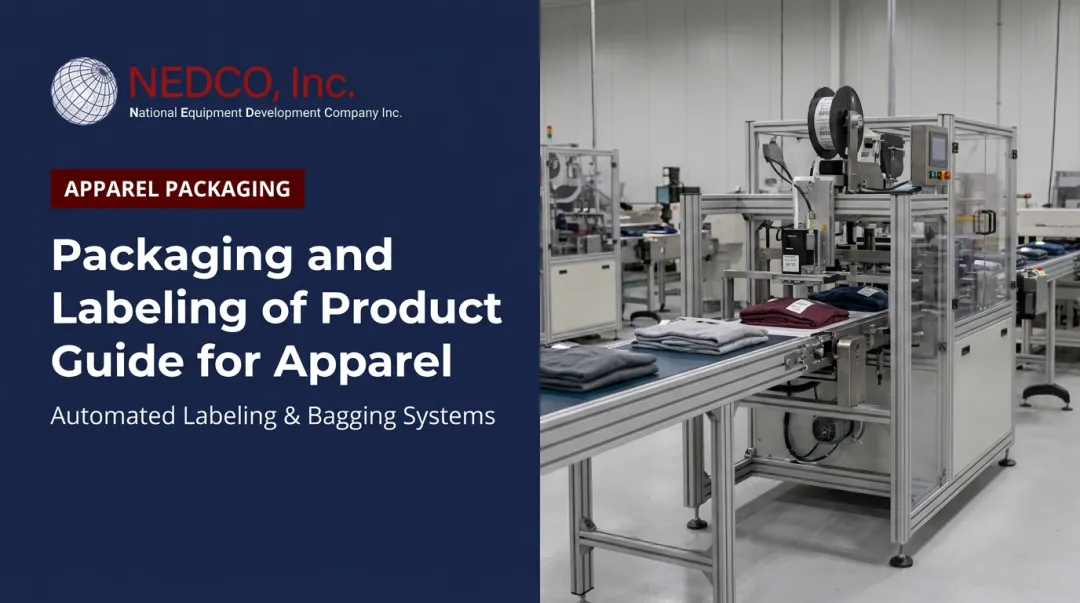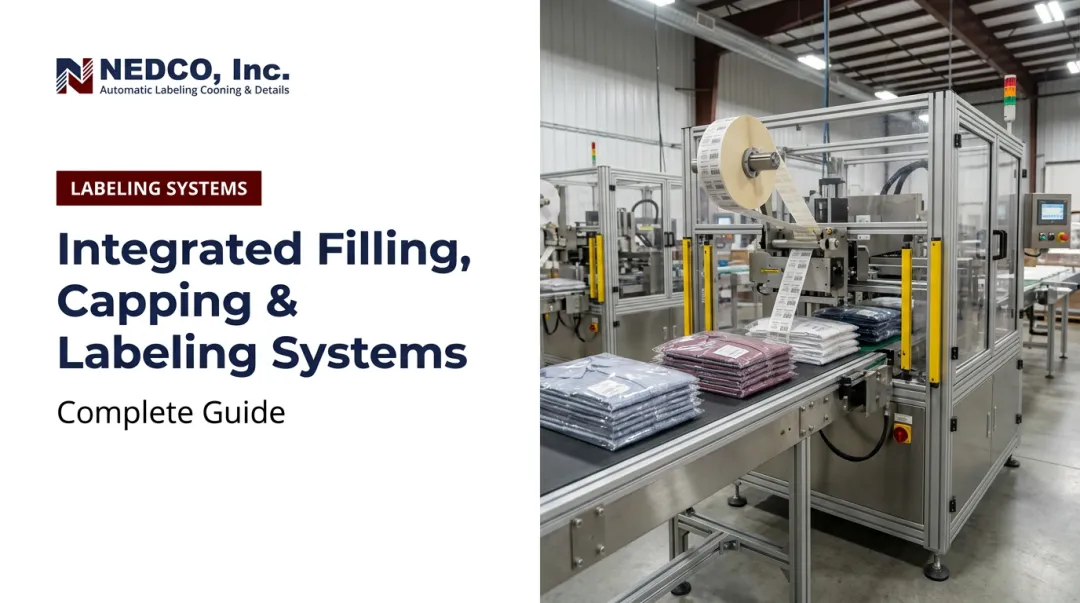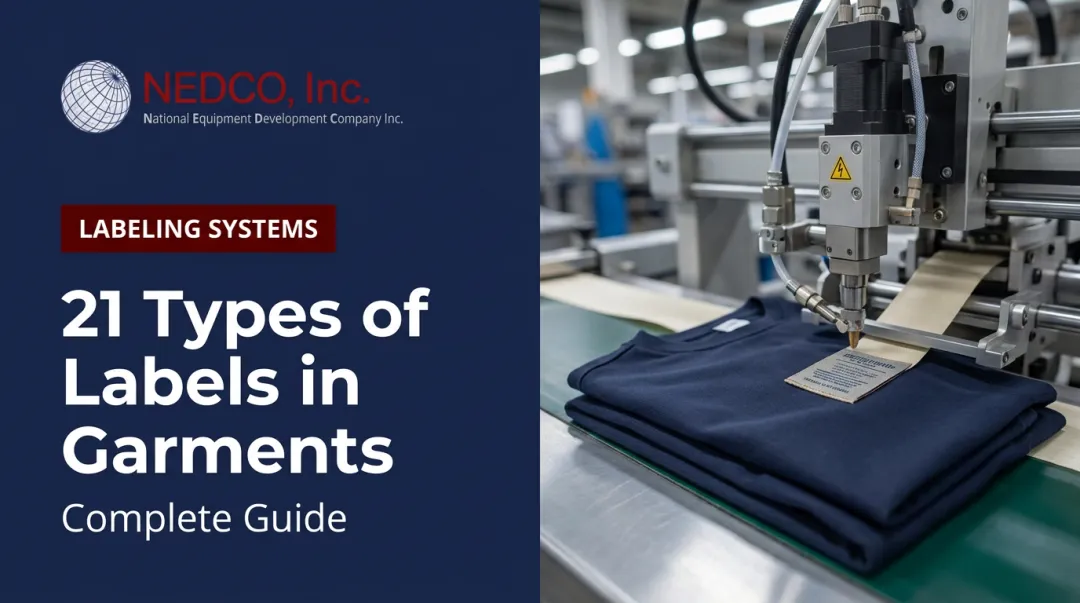
Sticker labeling machines have moved from a "nice-to-have" to a production line requirement. As order volumes climb and compliance rules tighten across pharma, food, and retail, hand-applying labels just doesn't hold up.
This guide breaks down what sticker labeling machines actually do, the main application types you'll run into, and how to pick the right one for your line.
TL;DR
- Sticker labeling machines place labels consistently on bottles, containers, cartons, and packaged goods
- Automation raises throughput, protects brand consistency, and cuts manual labor cost
- Common types include bottle/container, wrap-around, and case, carton, or finishing-line labelers
- Pick by product shape, production volume, and fit with your existing line
What Is a Sticker Labeling Machine?
A sticker labeling machine is equipment that automatically dispenses and applies pre-printed adhesive labels onto products or packaging. It replaces the person standing at a table peeling and pressing labels by hand.
You'll find these machines wherever products need consistent, repeatable labeling:
- Production lines applying care labels, barcodes, or branding as items move through
- Warehouses and fulfillment centers applying shipping and compliance labels
- Finishing and packaging stations where folded goods, poly bags, or cartons get their final labels before shipment
In short, the machine handles one job well: the right label, in the right spot, every time—without depending on a steady hand at the table.
Why Are Sticker Labeling Machines Important in Product Packaging?
Manual labeling has a ceiling. A person can only apply labels so fast before consistency starts to slip, and consistency is exactly what customers and regulators expect.
What tends to go wrong without automation:
- Crooked or missing labels that trigger customer complaints or returns
- Slower order fulfillment as manual application becomes a bottleneck
- Inconsistent branding across batches, especially with multiple operators
- Costly compliance failures when labels carry required product or care information
That last point isn't hypothetical. A 2024 peer-reviewed analysis of FDA recalls from 2012 to 2023 found that roughly 8% of recalls during that period were labeling-related, including mix-ups and cross-labeling errors. Labeling mistakes aren't a minor operational hiccup. They're a documented driver of recalls and a clear signal that consistency matters in any packaging line, including apparel and textile finishing.
Automated labeling removes the guesswork. A machine applies consistent pressure, alignment, and speed from the first unit to the ten-thousandth. That reliability is why automation matters, and it sets up the next decision: which type of machine fits your product.
Types of Sticker Labeling Machines by Application
Sticker labeling machines aren't interchangeable. A machine built for round bottles won't handle a stack of folded t-shirts, and a pharma-grade vial labeler is overkill for shipping cartons.
Matching equipment to your actual product shape and line speed is what separates a smart purchase from an expensive mistake. Here's how the main categories break down.
Bottle & Container Sticker Labeling Machines
What it is: Equipment built to apply or wrap labels around cylindrical containers, such as bottles, jars, and tubs.
How it works: Products rotate on a turntable or move along a conveyor while a labeling head applies and wraps the sticker around the curved surface.
These machines are engineered specifically for round, rotating surfaces, which sets them apart from flat-surface labelers. That makes them a strong fit for:
- Beverage producers labeling bottles at high volume
- Personal care brands labeling round containers and tubes
- Chemical manufacturers labeling drums and jugs
Strengths and limitations: They deliver full wraparound coverage and high throughput. As one real-world example, the HERMA 152C wrap-around labeler rates up to 200 containers per minute using its belt configuration, but drops to 75 per minute with its higher-precision roller-prism setup.
Speed and precision trade off against each other across most bottle labelers, not just this one. These machines aren't efficient for flat or irregularly shaped products.
Vial, Ampoule & Pharma Sticker Labeling Machines
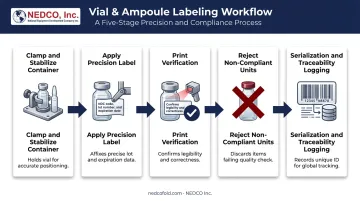
What it is: Specialized machines built for small, delicate cylindrical containers like vials and ampoules.
How it works: Clamps or rotating platforms stabilize each item while precision sensors apply labels carrying dosage, lot, and compliance data.
Gentle, precise handling of fragile, small-format containers sets these machines apart. General-purpose labelers simply aren't built for this level of accuracy.
These machines matter most in:
- Pharmaceutical manufacturing, where labels carry NDC codes, lot numbers, and expiration dates
- Laboratory environments requiring strict traceability
- Biotech and specialty drug packaging that needs serialization support
Regulatory pressure is real. FDA's 21 CFR 211.125 requirements mandate strict control of issued labeling, examination against batch records, and reconciliation of any discrepancies.
Vial labelers built for pharma settings often include print verification, rejection systems, and serialization support to help manufacturers meet those standards.
Strengths and limitations: Exceptional accuracy and compliance support come standard, but these systems are limited to small formats and carry a higher equipment cost than general labelers.
Case, Carton & Packaging Sticker Labeling Machines
What it is: Machines designed to apply shipping, barcode, or branding labels to boxes, cartons, folded goods, and finished packages.
How it works: Packages move along a conveyor where sensors trigger label application to the top, side, or corner of the package.
Unlike bottle and vial labelers, these systems are built for flat and irregular surfaces, and they're frequently integrated into end-of-line systems rather than standalone stations.
They're a natural fit for:
- Logistics and e-commerce fulfillment operations applying shipping labels
- Textile and apparel producers labeling folded garments, poly-bagged shirts, or shipping cartons
- Screen printers and bulk apparel finishers applying brand, care, or price labels at end of line
Industrial examples show just how wide the speed range can be. The Markem-Imaje 2200 rates over 150 packs per minute for cardboard boxes and corrugate, while smaller carton labelers designed for variable-height packages run closer to 40 labels per minute. The right speed depends entirely on your product mix, not a fixed industry standard.
This is also where finishing equipment intersects with labeling. At E-Z Fold, our Labeling System applies hang tags, price labels, care labels, and barcode stickers with consistent placement cycle after cycle. We offer two configurations:
- L-15 Model — compact benchtop or floor-mount unit, up to 800 labels per hour, suited for small to mid-size operations
- UPAII Model — heavy-duty inline system, up to 3,000 labels per hour, built for high-speed production and seamless integration with our folding, bagging, and conveyor systems
Strengths and limitations: These machines are highly versatile and integrate easily into existing finishing lines, acting as a natural complement to modular equipment like folding and bagging systems. The trade-off is calibration time when switching between varied package or garment sizes.
How to Choose and Finalize the Right Sticker Labeling Machine
The right machine matches your product, your volume, and where you're headed in the next few years—not necessarily the most advanced model on the market.
Key factors to weigh:
| Factor | What to Evaluate |
|---|---|
| Product shape and surface | Round, flat, or irregular; glass, plastic, fabric, or corrugated |
| Production volume | Current labeling speed needs versus projected growth |
| Label type and placement | Size range, material, and where the label needs to sit |
| Automation level | Semi-automatic for lower volumes versus fully automatic for continuous lines |
| Budget and consumables | Upfront cost plus ongoing supply and maintenance expenses |
| Line integration | Compatibility with existing folding, bagging, or conveyor equipment |
Before you buy, run the core checks on container geometry, label position, throughput, and placement accuracy. Skipping these steps is how businesses end up with equipment that looks great on paper but underperforms on the actual floor.
What to Avoid Before Finalizing Your Decision
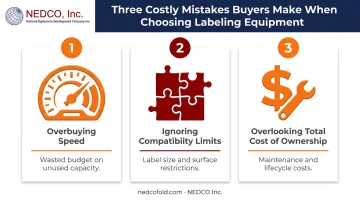
A few missteps show up again and again during equipment selection:
- Overbuying speed. Choosing a high-speed industrial machine when a semi-automatic model would comfortably meet current volume wastes budget on capacity you won't use for years.
- Ignoring compatibility limits. Every machine has trade-offs, whether it's a limited label size range or surface compatibility. Confirm these against your specific products before committing.
- Overlooking total cost of ownership. Purchase price is only part of the equation. According to PMMI/OpX's total cost of ownership framework, ongoing costs span design, application, and maintenance across the machine's full lifecycle, not just the sticker price.
That third point is where a lot of buyers get caught off guard. Downtime, replacement parts, and service access add up fast if they're not factored in upfront. NEDCO's Annual Service Plans and direct OEM replacement parts help keep that long-term cost predictable, whether you're running an L-15 or a full inline UPAII setup.
Conclusion
Choosing a sticker labeling machine comes down to your product, volume, and how labeling fits the rest of your finishing line. The right match protects brand presentation, keeps compliance labels consistent, and avoids bottlenecks at pack-out.
If your operation also folds, bags, or moves goods on conveyors, prioritize labeling equipment built to work with those stations—not a one-off unit bolted onto mismatched gear. Modular lines cut handoffs, reduce downtime, and scale when order volume grows.
E-Z Fold can help you map a labeling setup to your current textile or apparel line and the capacity you’re planning for next.
Frequently Asked Questions
What is a labeling machine used for?
Labeling machines automate applying product and packaging labels so brands stay consistent, meet compliance rules, and support traceability. They replace manual application to cut errors and speed up production.
What features should I look for in a labeling machine?
Prioritize speed, surface/container compatibility, label size flexibility, and automation level. Also confirm availability of integration support and after-sale service before purchasing.
What are the different types of labeling machines?
Main categories include pressure-sensitive/wraparound labelers, print-and-apply systems, rotary labelers, and case/carton labelers. Each is built for a different product shape and production speed.
Can sticker labeling machines handle different label shapes and sizes?
Many machines are adjustable within a defined range, but some are built for specific formats only. Always confirm size and shape compatibility with the manufacturer before purchase.
What is the difference between a label applicator and a print-and-apply system?
A label applicator applies pre-printed labels without inline printing. A print-and-apply system prints variable data and applies the label in one integrated step, ideal for shipping labels with changing information.
How much does a sticker labeling machine cost?
Pricing varies widely based on automation level, speed, and industry requirements, ranging from lower-cost semi-automatic units to higher-investment industrial systems. Most manufacturers, including E-Z Fold, provide custom quotes and financing options based on your line speed and production needs.