For apparel professionals and brand owners, understanding label types isn't optional. Missing or inaccurate care labels can trigger FTC enforcement actions. Wrong material choices create consumer comfort complaints. Poorly specified labels slow production and generate costly rework.
This guide breaks down all 21 types of garment labels across four frameworks: by material, by function, by manufacturing process, and by attachment method — so you can make informed decisions before production begins.
Key Takeaways
- Garment labels cover branding, sizing, care instructions, legal compliance, and traceability — all five matter
- The 21 types covered here fall across four frameworks: material, function, manufacturing process, and attachment method
- Care labels are legally required in the US under 16 CFR Part 423 — violations have resulted in fines up to $300,000
- No single label type fits every garment; the right choice depends on fabric, brand positioning, end use, and compliance needs
- Lock label specs into the tech pack before production begins — mid-run changes are costly and avoidable
What Are Garment Labels and Why Do They Matter?
A garment label is any sewn-in, heat-applied, or attached identifier that carries brand, sizing, care, fiber content, or compliance information. That definition is broader than most people assume — it encompasses woven neck tags, metal rivets on denim, heat-pressed tagless transfers, and leather waistband patches alike.
Labels serve two distinct roles:
- Functional: Care instructions, fiber content disclosure, country of origin, sizing, and manufacturer identification
- Commercial: Brand storytelling, perceived quality signaling, and consumer trust at point of sale
Neither role is optional. Cotton Incorporated's 2023 Clothing Label Survey found that 58% of consumers regard clothing labels as a very important information source, with 41% specifically consulting hang tags before purchase.
On the regulatory side, the FTC's Care Labeling Rule (16 CFR Part 423) requires permanently attached care instructions on all covered textile wearing apparel sold in the US. Enforcement is documented and ongoing.
Labels are also a production planning issue. They appear in a garment's tech pack as part of the bill of materials, which means label type, placement, and material must be specified before sampling or manufacturing begins. Getting this wrong mid-run is expensive.
Types of Garment Labels by Material
The material a label is made from determines its durability, feel against skin, visual appeal, and cost. Material selection is typically the first decision in label design.
This section covers five primary label materials:
- Metal
- Leather
- PVC and rubber (silicone)
- Fabric (woven and printed)
- Clear TPU
Metal Labels
Metal labels are tags or accessories made from aluminum, stainless steel, brass, copper, or zinc alloy, bearing an engraved, debossed, or stamped brand logo. Attachment methods include rivets, bendable legs, or sewing loops.
Best for: Denim waistbands, bags, workwear, outdoor apparel, premium fashion
Trade-off: High perceived quality and long-term durability, but heavier than fabric alternatives and not suitable for lightweight or delicate textiles. Per-unit cost is significantly higher than woven or printed fabric labels.
Leather Labels
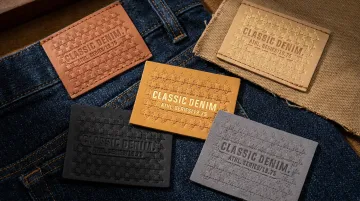
Leather labels use genuine, PU/artificial, or suede (microfiber) leather, customized through embossing, debossing, hot stamping, or printing. They attach by stitching, iron-on, or adhesive backing.
Best for: Denim, jackets, caps, bags, handmade goods
Trade-off: Premium tactile feel and visual warmth that woven labels can't replicate. Genuine leather carries higher costs and raises responsible sourcing questions; the Textile Exchange's Responsible Leather Round Table exists specifically to help brands address supply chain transparency.
PVC and Rubber Labels
PVC (polyvinyl chloride) labels and silicone labels are soft, flexible, three-dimensional labels that replicate logos in raised or recessed form. They attach via sewing, Velcro, or adhesive.
Best for: Outdoor gear, sportswear, bags, canvas products, children's clothing
Trade-off: Highly durable and water-resistant. However, EU REACH regulations (Commission Regulation 2018/2005) restrict certain phthalates — including DEHP, DBP, BBP, and DIBP — in plasticized articles at concentrations of 0.1% or more by weight, which can affect PVC label formulations sold into European markets. Silicone is an alternative within this category.
Fabric Labels
Fabric labels encompass woven and printed labels made from satin, nylon, taffeta, polyester, cotton, or ribbon. Soft, flexible, and sewn into seams or collars, they are the most widely used label type across all garment categories.
Trade-off: Versatile for both weaving and printing. Very fine taffeta can cause skin irritation; lower-quality satin can fray or snag at cut edges over time.
Clear TPU Labels
TPU (Thermoplastic Polyurethane) labels are thin, transparent or translucent labels with screen-printed logos that create a near-invisible branding effect. TPU labels are durable and resistant to water, heat, and chemicals.
Best for: Swimwear, underwear, activewear, performance fabrics
Trade-off: Clean minimalist look and skin-safe application, but design complexity is limited compared to woven or embroidered alternatives.
Types of Garment Labels by Function
Beyond material, labels are defined by the job they do. Most finished garments carry multiple label types serving different functions simultaneously.
Main (Brand) Labels
The main label is the primary brand identifier — standard placement is at the inner back collar of tops or the inner back center seam of bottoms. It carries the brand name and/or logo via weaving, printing, heat transfer, or leather construction.
This label sets the tone for perceived quality across the entire garment — shoppers notice it before they check stitching, fabric hand, or fit. A poorly executed main label undercuts even exceptional construction.
Care and Wash Labels
Care labels carry standardized washing, drying, ironing, bleaching, and dry-cleaning symbols and instructions. In the US, they are legally required under the FTC's Care Labeling Rule to be permanently attached and remain legible for the garment's useful life.
Regional standards differ significantly:
| Market | Standard | Updated |
|---|---|---|
| United States | ASTM D5489-18 | December 2023 |
| Europe/International | GINETEX / ISO 3758:2023 | 2023 |
| Japan | JIS L 0001:2024 | August 2024 |
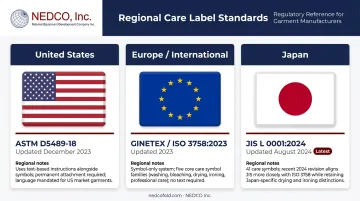
Brands selling internationally must account for these regional differences. The FTC's enforcement record is clear: Tommy Hilfiger paid $300,000 in 1999 to settle care labeling violations, and a New York women's apparel company paid $100,000 in 1998 for the same.
Size Labels
Size labels display the garment's size (S, M, L, XL or numeric equivalents) and are often combined with country of origin on a single label. Materials include printed or woven satin, nylon, or polyester.
Size labels are typically the first thing a shopper checks in-store, which makes placement critical. Inner collar, side seam, and waistband are the standard options — each involves a tradeoff between discoverability and comfort. Rough or stiff labels at the neckline rank among the most cited consumer complaints in garment finishing, a detail that matters when customers are deciding whether to return a product.
Hang Tags
Hang tags attach by string, cord, or metal chain and are removed before wearing. They carry brand story, price, size, care symbols, social media handles, or certifications — and serve primarily a retail and marketing function.
Hang tags offer the most creative freedom of any label type:
- Come in virtually any material — paper, cardstock, plastic, fabric, leather, or metal
- Accept custom shapes, die-cuts, foil finishes, and embossing unavailable on sewn labels
- Function as the first physical brand touchpoint a consumer handles at point of sale
Flag Labels
Flag labels are small labels sewn into the outside side seam or hem with one end folded and stitched and the other end exposed, displaying a brand name or logo as a visible exterior accent. Common in premium casualwear, denim, and knitwear, they provide external brand visibility without disrupting garment aesthetics.
Composition and Manufacturer Labels
Composition labels list fiber content by percentage (e.g., 95% cotton, 5% spandex) as required by the Textile Fiber Products Identification Act (TFPIA). Fibers comprising 5% or more by weight must be named and listed in descending order. Manufacturer labels carry the brand's Registered Identification Number (RN) for traceability — the FTC maintains a searchable public RN database.
These labels are often combined with care labels on a single substrate. Falsifying fiber content carries significant financial exposure: FTC bamboo mislabeling cases resulted in penalties totaling $5.5 million in 2022 alone.
Types of Garment Labels by Manufacturing Process and Attachment
The production method and attachment approach affect durability, texture, visual finish, and cost. Many material- and function-based label types above can be produced using one or more of these methods.
Woven Labels
Created on looms by interlacing threads (polyester, cotton, satin, damask, or taffeta) to form the brand logo directly into the fabric structure. The result is permanent and does not crack, fade, or peel.
Three primary constructions, each with distinct characteristics:
- Damask: Highest thread density, finest detail, softest hand feel
- Satin: Glossy appearance, smooth surface, lower thread count, can snag more easily
- Taffeta: Flat, crisp, economical — common for care and size labels
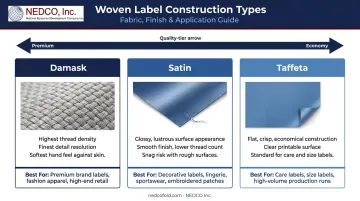
Woven labels are the standard choice for main brand labels where durability and professional finish are non-negotiable.
Printed Labels
Logos, care symbols, and text are applied to fabric substrates using screen printing, digital printing, or sublimation. Full color flexibility and faster turnaround than weaving make printed labels the go-to choice for care and size labels displaying complex symbol sets and multilingual text.
Print quality degrades with repeated washing, particularly on lower-quality substrates. For garments with frequent wash cycles, specify substrate quality upfront — it directly affects how long the print holds.
Heat Transfer Labels
Heat transfer labels (tagless tags) press a logo or design from a film onto the garment fabric using heat and pressure, eliminating the need for a sewn-in label entirely. Ideal for t-shirts, activewear, and children's clothing where interior comfort matters.
Key limitation: Transfers can crack or peel after repeated washing if application temperature or transfer quality is not precisely controlled.
Iron-On Labels
Iron-on labels use a heat-activated adhesive backing that bonds to fabric when pressed with an iron. They can be woven, printed, or embroidered with this adhesive pre-applied.
Common applications include uniforms, casual garments, and personalized name labels applied at home. Keep in mind that iron-on adhesion is less permanent than sewn attachment — high-heat washing or industrial laundering can cause delamination over time.
Embroidered Labels
Stitched thread over a fabric base in flat, 3D, or specialty styles (sequin, towel, hand-beaded). Application options include iron-on backing, sewing, adhesive, or Velcro.
Embroidered labels carry a premium, handcrafted aesthetic and are highly durable. Common on caps, jackets, patches, and workwear. They require longer production lead times and higher per-unit costs than woven or printed alternatives.
Hot-Stamped Leather Labels
High temperature and pressure emboss or foil-stamp a brand mark onto genuine, PU, or suede leather. Common on denim waistbands, bags, shoes, and hats.
The process creates a distinctive tactile impression but requires precise temperature control and compatible leather material to avoid cracking or uneven results.
Die-Cast Metal Labels
Manufacturers pour metal alloys into molds, then finish them with plating, painting, enamel glaze, or inlaid stones — producing highly detailed, three-dimensional hardware labels.
Best for: High-end fashion, leather goods, outerwear
Verify corrosion resistance specifications for any garment subject to moisture or outdoor use. Plating and sealing quality determines long-term finish durability.
High-Frequency (Felt) Labels
Electromagnetic waves above 100 kHz weld silicone or PVC material onto felt fabric, creating a soft, tactile label with a slightly raised 3D logo effect. The welding process bonds materials without adhesive, producing a durable, flexible finish.
Applications: Clothing, accessories, gifts, shoes, decorative ribbons
Sewing Labels
"Sewing labels" describes any label — woven, printed, leather, PVC, fabric, or metal — featuring grooves, holes, or edges designed for machine stitching onto a garment.
Sewing is the most secure and permanent attachment method, surviving industrial washing and repeated use better than adhesive or iron-on alternatives. It is the standard approach for main labels, care labels, and size labels across most production environments.
Metal Labels with Rivets and Bendable Legs
Two hardware attachment methods that secure metal labels without sewing:
- Rivets: Driven through fabric and clinched on the reverse
- Bendable legs: Metal prongs that pierce fabric and fold flat
Both create a secure mechanical bond without a sewing machine, making them useful for retrofit branding or small-batch customization. Common in denim, bags, hats, and leather goods.
How to Choose the Right Garment Label
The right label depends on four intersecting factors: end use and wash durability requirements, brand aesthetic positioning, compliance obligations for the target market, and production scale and budget.
Most finished garments require multiple label types working together — a woven main label paired with a printed care label and a separate size label, for example. Treat label selection as a coordinated system, not a series of isolated decisions.
A practical decision sequence:
- Start with function — What information must this label carry? (brand, care, size, fiber content)
- Select material — Based on garment type, wash frequency, and skin contact requirements
- Choose manufacturing process — Aligned with visual quality standards and unit cost budget
- Confirm attachment method — Must match production capabilities and garment construction sequence
- Verify compliance — Confirm care and fiber content label requirements for each target market before printing
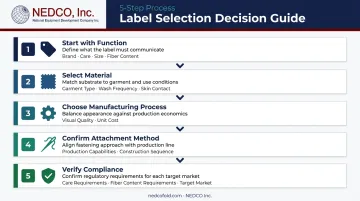
Label specifications should be locked into the tech pack before production begins. Mid-run label changes are disruptive and costly.
Once labeled garments leave the sewing floor, finishing and packaging becomes the next operational priority. For high-volume operations — screen printers, bulk apparel producers, and fulfillment facilities — automated finishing equipment addresses the throughput gap between production and shipment. NEDCO Inc.'s E-Z Fold systems (Covington, Georgia, since 1989) integrate automatic folding, labeling, bagging, and conveyor equipment into a continuous line built for that transition.
With that operational context in mind, these are the label selection mistakes most likely to create downstream problems:
Common selection mistakes to avoid:
- Over-specifying premium label types (metal, leather) for budget price-point garments where cost doesn't justify margin impact
- Choosing label materials that conflict with garment care requirements (non-washable adhesive on a machine-wash item)
- Failing to verify regional compliance requirements before printing care or fiber content labels for international markets
Frequently Asked Questions
What are the different types of garment labels?
Garment labels fall into four classification frameworks:
- By material: metal, leather, PVC, fabric, TPU
- By function: brand, care, size, hang tag, flag, composition
- By manufacturing process: woven, printed, heat transfer, embroidered, die-cast
- By attachment method: sewn, riveted, iron-on, heat transfer
Together, these frameworks cover all 21 distinct label types used across garments, accessories, and textiles.
What are the 5 uses of labels on a garment?
The five core functions are: brand identification, size information, care and washing instructions, legal compliance (fiber content and country of origin disclosure), and product traceability via manufacturer identification or RN number. Most finished garments carry labels serving all five functions simultaneously.
What are the 5 basic care labels?
The five standard care symbol categories are:
- Washing: temperature and method
- Drying: tumble, flat, or line dry
- Ironing: temperature settings
- Bleaching: permitted or restricted
- Dry cleaning: professional solvent cleaning
Symbol sets vary slightly between ASTM (US), GINETEX/ISO (Europe), and JIS (Japan) systems.
What is the difference between woven and printed garment labels?
Woven labels interlace threads on a loom to form the design directly into the fabric structure — the result is permanent and does not fade, crack, or peel. Printed labels apply ink or dye to a fabric surface, offering more color flexibility and faster turnaround, but print quality can degrade with repeated washing depending on substrate and print method quality.
Are care labels legally required in the United States?
Yes. The FTC's Care Labeling Rule (16 CFR Part 423) requires all covered garments sold in the US to carry permanently attached care instructions legible for the product's useful life — a rule the FTC voted 5-0 to retain in July 2021. Documented penalties range from $100,000 (a New York women's apparel company, 1998) to $300,000 (Tommy Hilfiger, 1999).
What label material is most comfortable for direct skin contact?
Heat transfer labels and TPU labels are the most skin-friendly options, as they eliminate a separate label piece entirely. Among sewn-in labels, damask woven and printed satin are the softest choices — taffeta and coarser substrates are more likely to cause irritation at the collar or waistband.