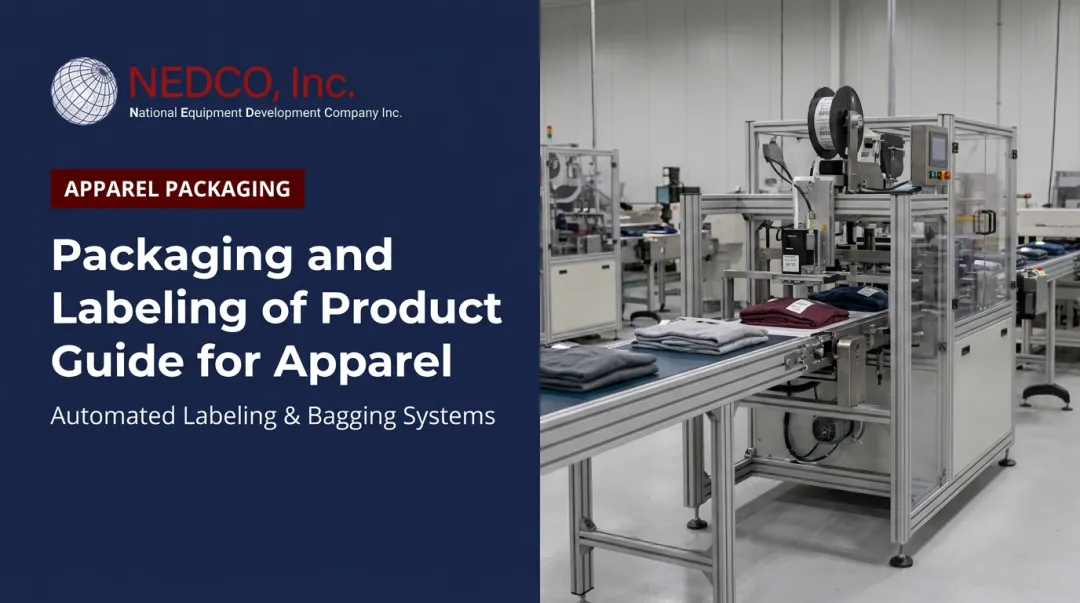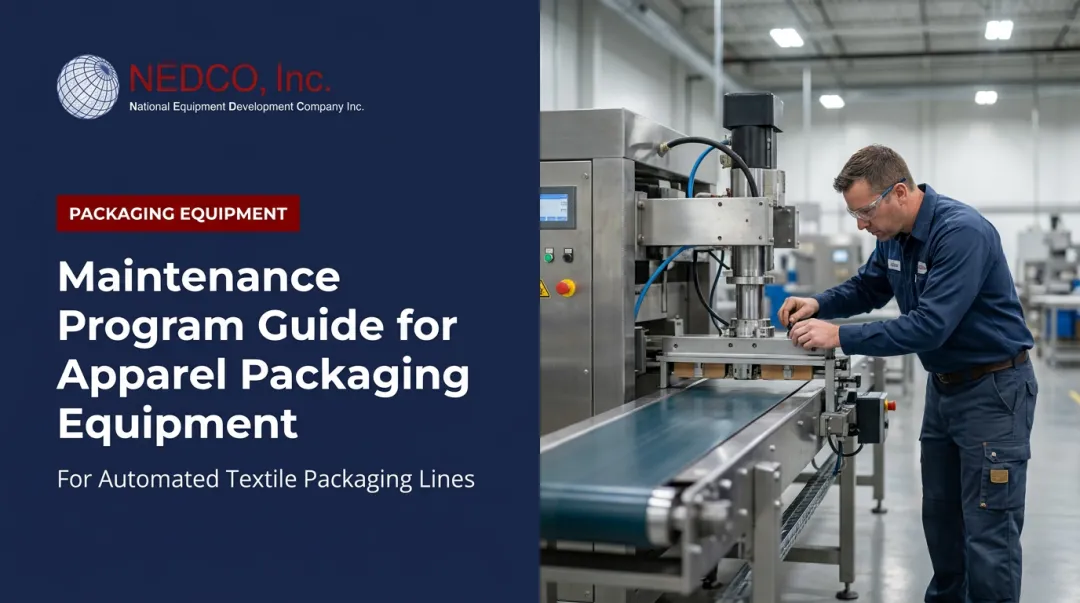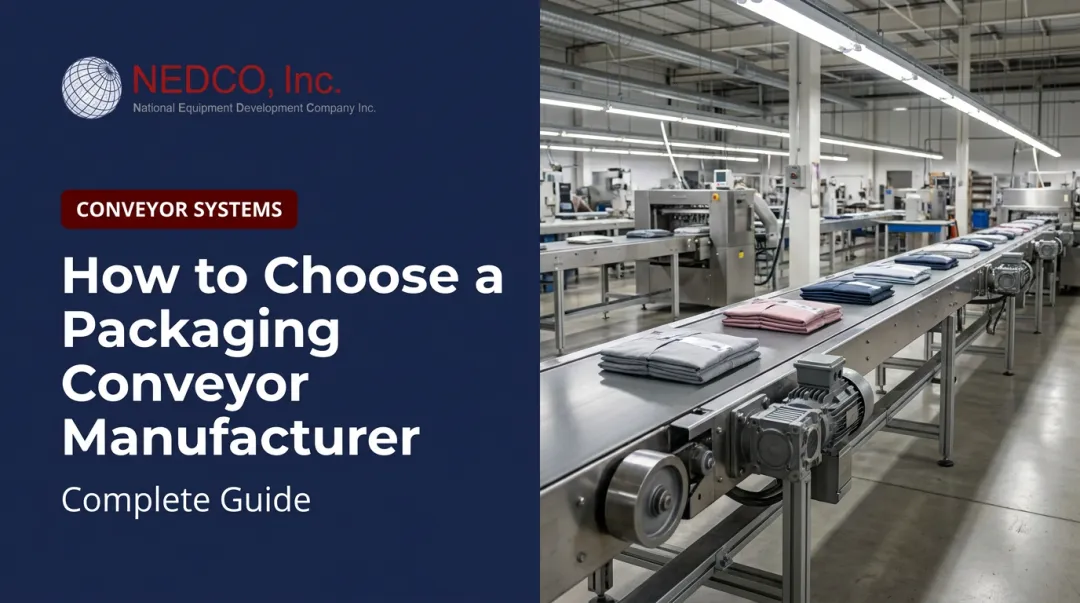
Apparel packaging machines — garment folders, poly baggers, heat sealers, and shrink-wrap systems — each address a distinct bottleneck in the finishing workflow. Automation reduces operator fatigue, improves presentation consistency, and meaningfully increases output. For context, ROQ documented in 2021 that manual folding is both laborious and inconsistent, while automated folding can process up to 700 pieces per hour with a single operator — a benchmark that illustrates how significant the throughput gap between manual and automated finishing can be.
This guide covers the top packaging machine manufacturers for apparel shops, what distinguishes each one, and how to evaluate them for your operation.
Key Takeaways
- Apparel packaging requires multiple machine types — folders, baggers, sealers, and shrink tunnels — each covering a different finishing stage
- Purpose-built apparel equipment outperforms general industrial alternatives for soft goods handling
- Four criteria drive the right choice: throughput speed, operator ease, parts availability, and after-sale service
- NEDCO Inc. / E-Z Fold, Rennco, Clamco, Texwrap, and PAC Machinery each serve distinct production needs
- U.S.-based, apparel-specialized manufacturers deliver faster support and lower total cost of ownership
What "Packaging Machine" Means in an Apparel Context
Most apparel shops need more than one machine type. The finishing workflow typically spans several distinct steps, each with its own equipment category:
| Machine Type | Function |
|---|---|
| Automatic garment folder | Folds shirts and soft goods to consistent, repeatable dimensions |
| Vertical poly bagger | Forms and seals poly bags around folded garments |
| L-bar heat sealer | Creates side and end seals on shrink or poly film packages |
| Shrink tunnel | Applies controlled heat to shrink film after sealing |
| Label applicator | Applies product or shipping labels during or after finishing |
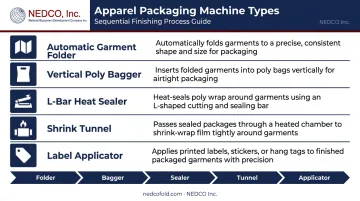
The integrated sequence — fold, bag or pack, label — drives throughput in every high-volume apparel operation. Manual execution at any stage creates a bottleneck. A folder without a downstream bagger leaves operators hand-stuffing bags, and a bagger without a sealer produces inconsistent closures. Either gap shows up immediately in throughput and presentation quality.
The manufacturers below were selected based on apparel-specific capability, ease of operation, parts and service availability, and direct applicability to textile and garment finishing lines.
Top Packaging Machine Manufacturers for Apparel Shops
E-Z Fold / NEDCO Inc.
Founded in 1989 in Covington, Georgia, NEDCO was started by engineer Jack Dodson Jr. — previously a lead sales engineer at All-Pac, the company behind the world's first automatic T-shirt folding machine. He launched the E-Z Fold T-Shirt Folder and has built garment finishing and packaging equipment for the textile and apparel industries ever since.
Now under second-generation leadership with Jason Dodson, NEDCO serves customers nationwide from its Georgia headquarters.
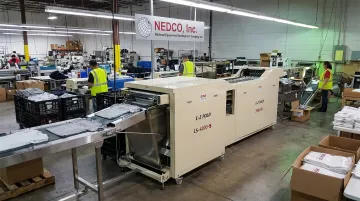
The E-Z Fold line was engineered from the ground up for apparel — not adapted from machinery built for other industries. Its modular architecture lets a shop start with a folding machine and add a labeling system, bagger/sealer, and conveyor as production grows, without replacing core equipment.
After-sale support is direct and named: Don Cranshaw handles service requests and parts ordering at Don@nedcofold.com or 770-484-9969, with annual service plans available for ongoing preventative maintenance.
| Category | Details |
|---|---|
| Key Equipment | E-Z Fold 2000 Automatic T-Shirt Folding Machine (models LS-4200-5 and 2000-5); Automated Bagger and Sealer System; Automatic Apparel Labeling System; Industrial Pillow Compression Machine; Automatic Conveyor System (horizontal and inclined variants) |
| Notable Features | Modular design for scalable line integration; made in USA; ease of operation; operator fatigue reduction; OEM parts availability; annual service plans; financing through Beacon Funding |
| Best For | Apparel shops, screen printers, embroiderers, graphic design firms, bulk garment manufacturers, and print-on-demand operations needing a complete, domestic-supported finishing and packaging solution |
Rennco LLC
Founded in 1969 and headquartered at 300 Elm Street in Homer, Michigan, Rennco is a ProMach brand specializing in vertical poly bagging and L-bar sealing systems for consumer goods — with apparel explicitly listed among its supported product categories. The company's systems form bags from centerfolded polyethylene or polyolefin film and are available in semi-automatic and automatic configurations.
Rennco's compact systems are well-suited to shops that need fast, consistent garment bagging without a large footprint. The 2024 EZ20 is an entry-level, all-electric bagger built for operations just starting to automate their workflow.
| Category | Details |
|---|---|
| Key Equipment | Model 201 Vertical L-Bar Sealer; EZ20 Vertical Bagger (launched 2024); Vertical L-Bar Sealers 301 and 501 |
| Notable Features | Model 201: up to 35 packages/minute, 2×2 to 8×10 in bag range, 3×3.5 ft footprint; EZ20: up to 25 packages/minute, bags up to 14×20 in, max 5 lb filled weight |
| Best For | Mid-volume apparel operations and fulfillment centers needing compact, reliable garment bagging; entry-level shops starting automation with the EZ20 |
Clamco Corporation
Clamco is a PAC Machinery brand operating out of Berea, Ohio, focused on L-bar sealers, combination sealer/tunnel systems, and standalone shrink tunnels. Its equipment spans tabletop to high-speed automated configurations, making it applicable across a range of packaging volume levels in retail and commercial environments.
Its shrink-system specifications are well-suited to garment and soft-goods packaging in retail and wholesale contexts.
| Category | Details |
|---|---|
| Key Equipment | 6750EL Automatic L-Bar Sealer; 250C Combination Sealer/Tunnel; 820 Tabletop Shrink Tunnel; 4T and 6T Heavy-Duty Shrink Tunnels |
| Notable Features | 6750EL: up to 60 packs/minute, 95 ft/min conveyor, 20×25 in seal bar; 820 tunnel: tabletop footprint, max 16×8 in package; 250C: 23 in side-seal length, 16×9 in tunnel opening |
| Best For | Boutiques, retail packaging operations, and wholesale distributors needing reliable L-bar sealing and shrink tunnel capability for folded or bagged garments |
Texwrap Packaging Systems
Texwrap is based in Washington, Missouri and was acquired by ProMach in 2016. The company produces continuous-motion and intermittent-motion side-seal shrink wrappers designed for retail-ready presentation in distribution and fulfillment environments. Texwrap explicitly states that soft goods including T-shirts can be bagged in printed poly, and that it has designed wrappers for garments on hangers — making it one of the few shrink-wrap suppliers with verified, first-party apparel application documentation.
| Category | Details |
|---|---|
| Key Equipment | CSS Series Continuous Motion Side Sealers; ISS Series Intermittent Motion Side Sealers |
| Notable Features | Printed poly film compatibility for retail-ready garment presentation; two motion-class options to match throughput needs; side-seal format suitable for folded and hanging garments |
| Best For | Apparel distributors, wholesalers, and retail packaging operations requiring consistent shrink-wrapped presentation at varying throughput levels |
PAC Machinery
PAC Machinery traces its history to 1963 (originally Packaging Aids) and is headquartered in San Rafael, California. Its portfolio runs from tabletop impulse sealers through automated Rollbag fulfillment systems, covering the full range of bag-sealing and auto-bagging equipment formats. The equipment's bag-size range and throughput ratings translate directly to poly-bag garment packaging.
| Category | Details |
|---|---|
| Key Equipment | PAC PT Impulse Sealer (tabletop, pneumatic); Rollbag R785 Auto Bagger; Rollbag R3200/R3200XL Fulfillment Auto Bagger |
| Notable Features | R785: up to 40 bags/minute, 2–12 in width, 3–20 in length, 1–4 mil thickness, 26×18×24 in footprint; R3200 integrates label printer-applicator; dedicated phone support Monday–Friday, 7:30 a.m.–7:00 p.m. ET |
| Best For | Shops ranging from single-operator tabletop sealing to high-volume e-commerce fulfillment operations; apparel and soft-goods packaging where flexible bag sizing and reliable support are priorities |
How We Chose These Manufacturers
A common mistake apparel shops make is sourcing packaging equipment from general industrial suppliers. Equipment not designed for soft goods can damage garments through excessive pressure and produce inconsistent seals on variable-thickness fabrics. It also requires constant reconfiguration for different garment sizes. Specialization in textile applications directly determines operational outcomes — not just what the spec sheet promises.
The manufacturers above were evaluated on six criteria:
- Apparel-specific design — Handles soft, variable-dimension garments without modification or reconfiguration
- Ease of operator training — Line staff can get up to speed quickly, keeping downtime minimal
- Throughput capacity — Rated speed matches real production volume, not best-case scenarios
- Parts and service access — Replacement parts and technical support available domestically, without long lead times
- Track record in textiles — Years of demonstrated experience serving garment and apparel customers specifically
- Total cost of ownership — Equipment durability and service costs over time, not just purchase price
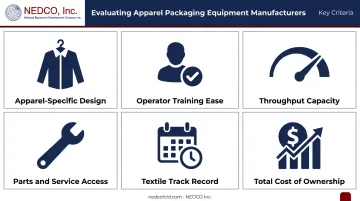
Each of these factors maps to a concrete operational outcome. A machine with no domestic parts support costs far more in downtime than its lower purchase price suggests. A folder not built for soft goods produces re-folding rework that negates any throughput gain.
Conclusion
The right apparel packaging machine partner understands how garments behave — soft, variable in thickness, sensitive to pressure and heat — and builds equipment around those realities. Brand name alone does not guarantee fit. What matters is apparel-specific engineering, reliable after-sales support, and a clear path to growth without adding proportional labor costs.
Those criteria should drive your vetting process. Evaluate any shortlisted manufacturer's track record in textile and garment environments specifically. Ask about modular upgrade paths, changeover ease between garment sizes, and service response times. If possible, request a live demo or product test with your actual garment types.
NEDCO Inc. / E-Z Fold has been building U.S.-made finishing and packaging equipment for apparel shops and garment manufacturers since 1989 — over 37 years of textile-specific experience. To discuss how their equipment can improve throughput and reduce operator fatigue across your production line, call 770-484-9969 or email support@nedcofold.com.
Frequently Asked Questions
What types of packaging machines do apparel shops typically need?
Most apparel shops need a combination of garment folders, poly baggers, bagger/sealer systems, labeling equipment, and conveyor systems. Each handles a different stage of the finishing process — folding produces consistent presentation, bagging protects garments in transit, and sealing secures the package for retail or fulfillment.
Which sealing machine is best?
The right bagger/sealer depends on your packaging format, production volume, and automation level. Prioritize machines rated for soft goods and variable garment thicknesses. Semi-automatic systems work for moderate volumes, while fully integrated inline systems suit higher throughput operations — confirm speed ratings and changeover time before committing.
How does an automatic garment folding machine work?
Automatic folding machines use a conveyor belt to feed garments into a mechanical folding section with guides and moving components that produce a consistent, repeatable fold. This eliminates manual folding variability and significantly improves presentation consistency across high-volume orders.
Can packaging machines handle different garment sizes and types?
Most quality apparel packaging machines include adjustable guides and modular settings to accommodate different garment dimensions. Before purchasing, confirm the machine's stated size range and ask how long a size changeover takes — simpler changeovers mean less downtime between runs.
What should I look for in a packaging machine manufacturer for my apparel shop?
Prioritize apparel-specific machine design, domestic parts availability, ease of operator training, and proven experience in the textile or garment industry. After-sale support matters as much as the equipment itself — confirm the manufacturer has dedicated service staff, stocked replacement parts, and a track record of supporting customers long after the sale.
Is it worth investing in packaging automation for a small apparel shop?
Even semi-automatic equipment delivers meaningful gains for small operations. NEDCO's bagger/sealer systems, for instance, can process far more packages per shift than a single operator working manually — with greater consistency and significantly less fatigue. The efficiency gains typically justify the investment quickly, even at lower production volumes.